
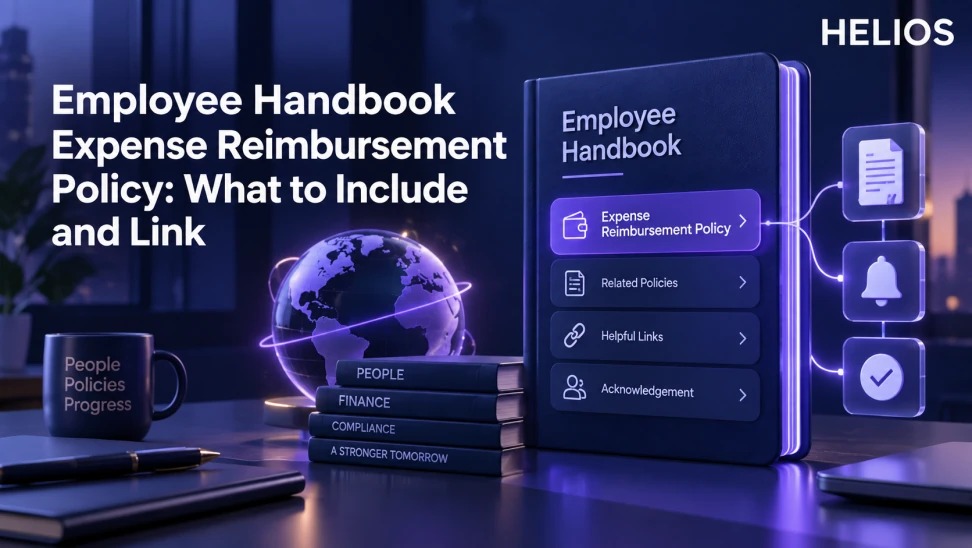
A concise employee-handbook expense reimbursement policy structure with links, change notices, acknowledgement, and ownership.
A practical framework for employee expenses
A concise employee-handbook expense reimbursement policy structure with links, change notices, acknowledgement, and ownership.
The handbook summary should direct employees to the controlled full policy and local addenda. Reimbursement, wage, tax, privacy, and record rules vary by jurisdiction and require qualified review.
For related guidance, see expense policy guide.
The strongest workflow asks for the minimum information needed to understand the business decision, applies the right reviewer, and preserves enough evidence for accounting, compliance, and later analysis.
Employee Handbook Expense Reimbursement Policy at a glance
| Handbook element | Include | Link to | Owner |
| Scope | Who and which expenses | Full eligibility policy | HR and finance |
| How to claim | Channel, fields, deadline | Submission guide | Expense operations |
| Approvals | Manager and exception path | Approval matrix | Finance |
| Payment | Timing and status | Reimbursement process | Payroll or treasury |
| Changes | Effective date and notice | Policy history | Policy owner |
For related guidance, see travel expense policy template.
A clear operating model connects context, evidence, ownership, and action.
Keep the handbook summary short
State who is covered, the principle that authorized business expenses may be reimbursed, where to submit, the normal deadline, who approves, and where to get help.
Avoid copying every limit into the handbook. Detailed rates and local rules change more often and belong in a controlled policy or schedule.
For related guidance, see AI expense copilot data protection.
Link a complete policy package
Link eligibility, prohibited expenses, receipts, business purpose, currencies, mileage, travel, meetings, home office, lost receipts, exceptions, approvals, payment, corrections, disputes, privacy, and record retention.
Use stable links and clear owners. Employees should reach the current version rather than an emailed attachment that can become outdated.
Explain the employee workflow
Tell employees to obtain required pre-approval, capture evidence promptly, select the correct entity and dimensions, describe the purpose, submit by the deadline, and respond to returns.
Explain reimbursement status and where to report an incorrect payment. Keep system instructions separate from policy rules but link both.
Define manager and finance roles
Managers confirm business necessity, budget responsibility, and known context. Finance validates policy, evidence, coding, tax, accounting readiness, and exceptions according to the operating model.
Publish delegation and escalation routes so absences and conflicts do not stall reimbursement.
For related guidance, see business expense reimbursement controls.
Manage changes and acknowledgements
For each change state effective date, affected employees, summary, action required, and full-policy link. Keep version history and evidence of required acknowledgement.
A checkbox alone does not prove understanding. Use targeted examples and short guidance for material changes.
Add a copy-ready handbook section
“The company reimburses authorized and properly documented business expenses under the Expense Reimbursement Policy and applicable local addenda. Submit expenses through the approved system within the published deadline, attach required evidence, and provide a clear business purpose. Manager and finance approval may be required. Current rules, rates, exceptions, payment timing, and support are available at \[controlled policy link\].”
Have HR, finance, legal, tax, payroll, security, and employee representatives review the wording relevant to their responsibilities.
How Helios supports this workflow
Helios can connect mobile expense capture, multilingual OCR, configurable policy controls, role-based approvals, accounting preparation, integration, and multidimensional reporting. Spark AI copilots can assist employees and reviewers in confirmed conversational and policy-review scenarios. Exact algorithms, automated decisions, integrations, and local requirements should be validated during implementation.
For related guidance, see global expense management.
- Provide one mobile channel for employee claims.
- Use policy prompts and validation during submission.
- Route manager, finance, and exception approvals.
- Offer conversational assistance for approved policy questions.
- Track policy version and workflow status where configured.
- Report return and exception patterns to improve communication.
A practical conclusion
Clear context makes employee expense decisions faster and easier to defend. Define the required facts, assign the correct owner, preserve exceptions, and use the resulting data to improve policy and operations.
See how Helios can support this workflow. Request a Helios demo.
FAQ
What belongs in the handbook summary?
Include scope, basic eligibility, submission channel and deadline, approval, payment direction, support, and a link to the full policy.
Why link instead of copying every rule?
A controlled full policy can hold detailed and frequently changing limits while the handbook remains concise and current.
Which related documents should be linked?
Link submission instructions, rates, travel and meeting rules, local addenda, approval matrix, exceptions, payment, privacy, and support.
How should policy changes be communicated?
State the change, audience, effective date, required action, owner, full-policy link, and acknowledgement requirement.
Who should review the handbook wording?
Finance, HR, legal, tax, payroll, security, and relevant employee representatives should review their areas.
How can Helios support policy communication?
Helios can apply policy prompts, route approvals, provide confirmed assistance scenarios, and report recurring return or exception reasons.